Saturday night runs itself. The tables are full, the kitchen is humming, and the tips are good. The problem is Tuesday. And Wednesday lunch. And that dead stretch between 3 and 6 pm when your staff, your rent, and your equipment all cost exactly the same as they do on a busy weekend, but almost no revenue is coming in.
Most restaurant owners try to fix slow nights with public discounts. That trains regulars to wait for the deal and quietly erodes your margin. There is a smarter tool sitting in your business already: your loyalty program. Used well, it becomes a way to steer demand toward the exact shifts you need to fill, without ever posting a price cut where the whole world can see it.
Why slow nights cost more
Off-peak hours usually land Monday through Thursday, in early evenings and quiet lunch shifts. They feel harmless because the restaurant is calm, but they are the most expensive hours you run. Your fixed costs of rent, salaried staff, insurance, and equipment do not drop just because the dining room is half empty. Every empty seat on a Tuesday is margin you will never recover.
A single busy Saturday cannot make up for four dead weeknights. The restaurants that win are the ones that flatten the curve, pulling demand from their packed peaks into the shifts that are bleeding money.
Points as a steering tool
Stop thinking of your loyalty program as only a reward. Think of it as a lever that moves demand in time. When you tie extra value to a specific day or hour, you give your best customers a concrete reason to visit when it suits you, not just when it suits them.
The classic version is double points on your slowest night. If Tuesday is dead, members earn twice the points on every Tuesday visit. You are not slashing the check total, so the perceived value of your food stays intact. You are simply making one night more rewarding for people who already love you.
Reward the shifts you need
Get specific. A few structures that work without touching your menu prices:
- Double or triple points on named slow days, so the reward is invisible to walk-in customers paying full price.
- Members-only midweek menu or a small off-peak perk, like a free starter, that only exists Monday through Thursday.
- Bonus point thresholds for lunch visits, nudging your dinner regulars to try you at midday.
- Early-bird rewards that make the quiet 5 to 6 pm window the best time to earn.
Because these perks live inside your loyalty program, only members see them. Your brand never looks like the place that is always on sale.
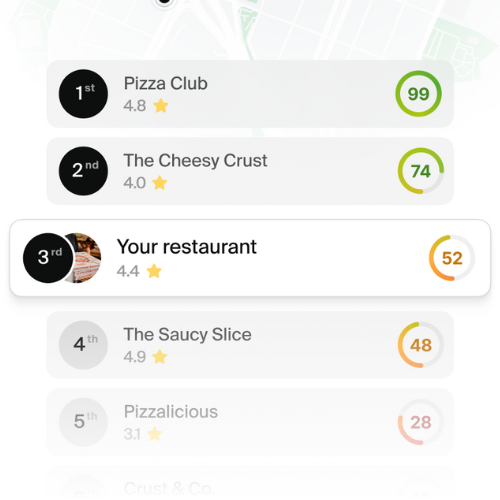
See how your restaurant ranks locally
The message that fills tables
A reward no one knows about fills zero tables. The real power of a loyalty program on a slow night is the direct line it gives you to people who already choose you. A single push notification or WhatsApp message to a few hundred members can turn a dead evening around.
The math is striking. A message to 500 loyalty members on a quiet night can realistically drive 30 to 50 incremental covers. At an average of 25 dollars per cover, that is 750 to 1,250 dollars in revenue from one notification that cost you nothing to send. Do that twice a week and the annual impact is enormous.
Use guest data to target
Blasting every member with the same message works, but targeting works better. Your loyalty data tells you who already likes quieter visits, who has not been in for a month, and who lives close enough to swing by on a weeknight.
Send your midweek invite to the guests most likely to say yes. A lapsed regular who used to come every Wednesday is a far better target for a Wednesday offer than someone who only ever visits for weekend birthdays. Smart segmentation means fewer messages, higher response, and members who feel understood rather than spammed.
Make midweek feel exclusive
The best off-peak loyalty plays feel like a privilege, not a fire sale. Frame your slow-night perks as insider access. A members-only Tuesday tasting, a first look at a new dish on a quiet Thursday, or a small surprise reward for showing up midweek all build the feeling that loyalty members get something the general public does not.
That framing protects your prices and deepens the relationship at the same time. Guests are not chasing a discount. They are being let into something.
Track what actually works
Treat every off-peak campaign as a test. Note which night you targeted, how many members you reached, and how many covers showed up. Over a few weeks you will see which offers and which segments move the needle, and which ones do not.
The goal is a repeatable playbook. When you know that a Tuesday double-points push to your local segment reliably adds 40 covers, you have turned your slowest night into a predictable, controllable source of revenue instead of a weekly loss you just accept.
Slow nights are not a fact of life. They are a demand problem, and your loyalty program is the tool built to solve it. Stop discounting in public and start steering your best customers toward the shifts that need them most.
Turn one-time guests into loyal regulars with RAY

