
Your delivery menu is not just your dine-in menu with a delivery fee bolted on. When food has to survive 20 minutes in a bag before a customer opens it, the dishes that made your restaurant famous can arrive soggy, cold, or leaking. In 2026, operators are treating delivery as its own product line, engineering menus specifically for travel. Here is how to build a delivery menu that protects food quality, raises your average ticket, and earns repeat orders.
Why your dine-in menu fails on delivery
The food delivery market keeps growing, and comfort categories like pizza, burgers, chicken, sandwiches, and tacos dominate because they travel well. The problem is that many restaurants list every dish they sell in-house, including items that physically cannot handle a car ride. Crispy fried food turns limp. Delicate plating slides apart. Hot and cold components mix into a mess.
Every one of those orders generates a refund request, a one-star review, or a customer who never orders again. A delivery menu that ignores transport is silently burning your margin. The fix is deliberate menu engineering: keep what travels, fix what almost works, and cut what cannot survive.
Audit every dish for travel
Go through your menu and sort each item into three buckets:
- Travels well: stews, pizzas, rice bowls, pastas with sauce, roasted meats, burgers built to hold. These are your delivery heroes. Feature them first.
- Fixable: fries, fried chicken, and crispy items that fade but can be saved with vented packaging or a quick recipe tweak. Worth keeping if you solve the packaging.
- Cut from delivery: souffles, items with thin sauces that pool, anything plated for visual drama. If it cannot arrive looking like the photo, it does not belong on your delivery menu.
You do not have to delete these dishes from your restaurant. You simply hide them from the delivery channel so customers never order something destined to disappoint.
Package food like it matters
Packaging is no longer an afterthought. In 2026, resealable lids, portion-controlled containers, vented boxes for fried food, and ergonomic shapes are becoming standard expectations, not differentiators. Separate hot and cold items into different containers. Pack sauces on the side so nothing turns soggy in transit. Use vented containers for anything crispy so steam escapes instead of softening the crust.
Sustainable materials like bagasse and rPET are now what many customers expect, and presentation still matters even at home. A clean, branded, well-sealed package signals that you care, and it is one of the cheapest ways to make a delivery order feel premium.
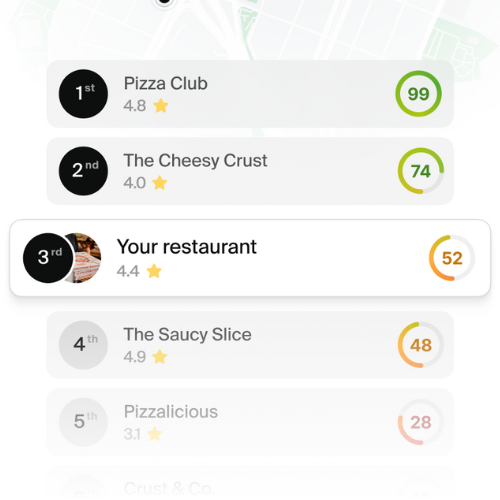
See how your restaurant ranks locally
Engineer the menu to sell more
Once your dishes travel well, structure the menu to raise the average ticket. A few proven moves:
- Build bundles. Pair a main, a side, and a drink into a family or combo deal. Bundles raise check size and simplify packing.
- Add easy add-ons. Extra sauce, dessert, a second protein. Low-effort upsells that customers happily tap when they are already hungry.
- Lead with high-margin heroes. Put your most profitable, best-traveling dishes at the top where eyes land first.
- Right-size portions for one screen. Online ordering rewards menus that are easy to scan, so trim the list to your strongest sellers.
Write descriptions and photos that convert
On delivery apps and your own ordering page, customers buy with their eyes. Every delivery item needs a real photo, not a stock image, and a short description that names the key ingredients. Dishes with photos consistently outsell dishes without them. Clear, appetizing descriptions also reduce confusion, refunds, and the wrong-expectation reviews that drag down your rating.
Own the channel and the margin
The smartest menu engineering means little if a third-party app takes up to 30 percent of every order. The 2026 playbook is to use delivery apps for discovery, then move repeat customers to your own commission-free ordering channel. Print a QR code on the package that links straight to your direct menu, with a small incentive for ordering next time directly. Engineer the menu once, then keep more of every sale by owning the relationship.
A delivery menu built for travel protects your food, your reviews, and your margins. Audit your dishes, fix your packaging, structure for higher tickets, and move loyal customers to a channel you control. Do that, and delivery stops being a discount on your worst-traveling food and becomes one of your most profitable lines.
Get commission-free delivery orders with RAY

