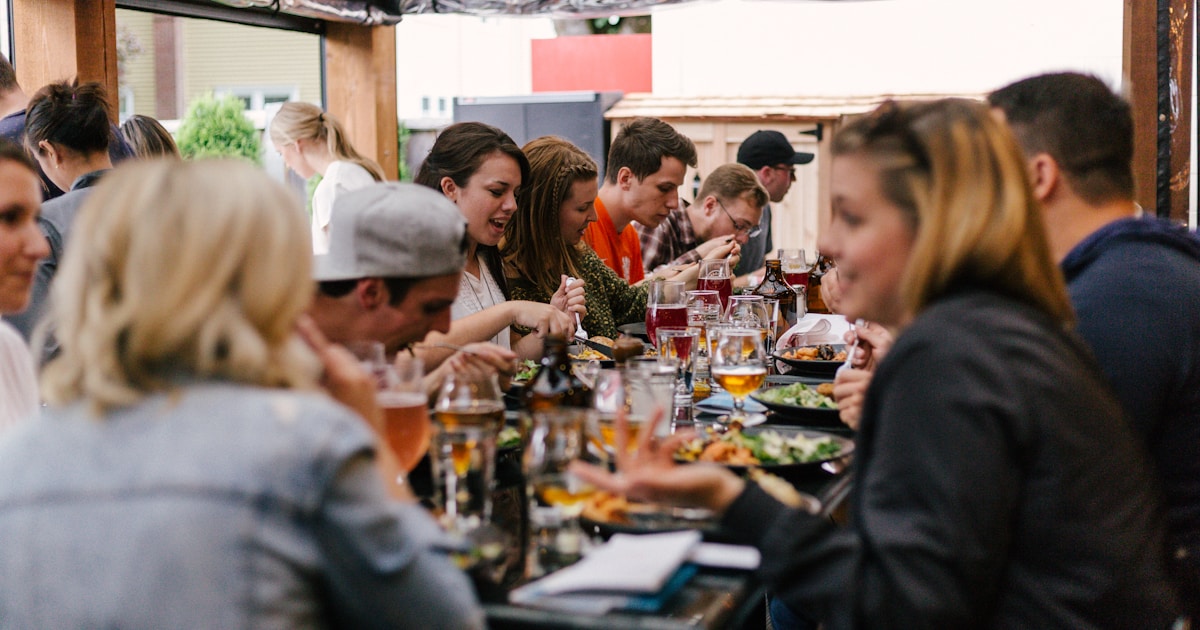
A table for two is nice. A table for fourteen changes your night. Birthday dinners, team celebrations, baby showers and company year-end parties fill seats you would otherwise struggle to sell, and they do it at a much higher average check per booking.
The demand is already there. TheFork reported that restaurant bookings for large groups grew 49% in a single six-month stretch, and OpenTable lists large-party reservations of six or more guests among the defining dining trends of 2026. The question is not whether groups are looking. It is whether they can find you, book you and trust you without picking up the phone.
Most restaurants lose group business for a boring reason: there is nowhere on their website to request one. Here is how to fix that and keep every peso of the revenue.
Why big tables are worth chasing
A group booking is not just a bigger version of a normal one. The economics are different in three ways.
- Higher spend per guest. Groups order appetizers to share, more drinks and more dessert. Celebration context raises the ceiling on what people are willing to spend.
- Predictable revenue. A confirmed party of twenty with a pre-ordered menu is revenue you can staff and buy for days in advance, instead of guessing.
- Free marketing. Twenty guests at a great dinner means twenty people who now know your restaurant. A good portion of them come back on their own.
The catch is that groups also carry more risk. A no-show party of two costs you one table. A no-show party of eighteen can wreck an entire service. That is exactly why the booking process matters so much.
What group organizers actually need
The person booking for a group is under pressure. They are coordinating schedules, dietary restrictions and budgets for other people, and they are usually deciding between three or four restaurants at once. They will choose whichever one answers their questions fastest.
Before they commit, they want to know: can you fit us, is there a private or semi-private area, what does it cost per person, can we pre-order, and what happens if our headcount changes. If your website answers those five questions clearly, you win a large share of these bookings before a competitor even replies to the email.
Build a real group booking page
Do not bury group requests inside a generic contact form. Give them a dedicated page that ranks for searches like “restaurant for large groups” in your city, and put a link to it in your main navigation and your Google Business Profile.
That page should include your maximum party size, photos of the actual space a group would sit in, a sample group menu with per-person pricing, your deposit policy and a short request form. Keep the form to six fields at most: name, contact, date, time, headcount and occasion. Every extra field costs you submissions.
Speed matters more than polish here. Set the expectation that you reply within a few hours, then actually do it. Organizers often book the first restaurant that gets back to them with real answers.
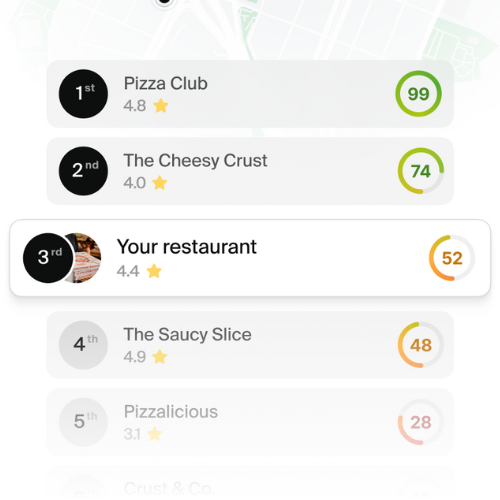
See how your restaurant ranks locally
Use deposits and minimum spend
Deposits are the single most effective protection against group no-shows, and serious organizers expect them. A modest per-person deposit that applies to the final bill filters out tentative requests without scaring off real ones.
For larger parties or a private area, a minimum spend works better than a rental fee. It feels fairer to the guest and guarantees your floor revenue. A reasonable structure looks like this:
- Six to twelve guests. Standard booking, no deposit, confirm by message two days before.
- Thirteen to twenty-five guests. Set menu or pre-order required, plus a per-person deposit.
- Twenty-six guests and up. Private or semi-private area with a minimum spend and a signed confirmation.
Write the policy down and publish it. Ambiguity is what creates awkward conversations later.
Pre-orders protect your kitchen
A party of twenty ordering individually at 9pm on a Saturday is how a kitchen falls behind for the rest of the night. Asking groups above a certain size to choose from a limited set menu, or to pre-order mains a few days out, keeps service smooth and lets you buy product with confidence.
Frame it as a benefit, because it is one. Guests get their food faster and together, the host knows the cost in advance, and nobody is stuck reading a long menu while twenty people talk over them.
Follow up while it is fresh
The day after a group dinner is the highest-value moment you will ever have with that organizer. They just had a good experience and they are the person who books for their whole circle.
Send a short thank-you message with an easy way to book again, and ask for a Google review while the memory is warm. Group organizers tend to be repeat organizers. The office that had its mid-year dinner with you is the same office that needs a December party.
Keep the commission you would lose
Here is where the math gets uncomfortable. A booking platform charging a per-cover fee takes that fee on every single guest. On a party of twenty, one reservation can cost you the equivalent of an entire table of two. Run that across a busy season of group bookings and the number stops being trivial.
When a group books directly through your own site, you keep the full value of the booking and you keep the guest data: the email, the phone number and the occasion. That data is what lets you contact the same organizer next year instead of paying to reach them again.
Group business rewards restaurants that make booking easy and terms clear. Build the page, publish the policy, reply fast, and take the reservations on your own channels. RAY gives your restaurant a direct booking system with no per-cover commissions, so the biggest tables you serve are also the most profitable ones.
Take commission-free direct reservations with RAY

