No-shows are the silent profit killer of full-service restaurants. Industry surveys put the average no-show rate between 10% and 20% on weekends, and a single empty four-top during a Saturday peak can cost a mid-priced restaurant $200 to $400 in lost revenue. Multiply that across a year and no-shows quietly become one of the largest controllable losses on the P&L.
The good news in 2026: a combination of better confirmation tooling, smarter deposit policies, and direct reservation channels can cut no-show rates to under 3%. Here is the practical playbook we see working in restaurants across Latin America and the US.
Why No-Shows Got Worse Post-Pandemic
Diner behavior changed. Multi-booking (reserving at two or three places and picking on the day) became normal. Reservation marketplaces like OpenTable and TheFork make it frictionless to cancel — or simply not show — because the diner has no relationship with the venue. And SMS confirmation fatigue means generic reminders get ignored.
Three structural shifts in 2026 explain the spike:
- Commodity reservations: When the diner books on a marketplace, the restaurant is interchangeable.
- No skin in the game: Most platforms still let diners book without any deposit or card on file.
- Notification overload: Confirmation emails land in promotions tabs and get archived unread.
1. Move Your Reservations to a Direct Channel
The single biggest lever. When the booking happens on your own website — not on a marketplace — three things change: you own the diner data, you control the confirmation flow, and the diner perceives a relationship with your brand rather than with the platform. Restaurants that switched to direct reservations in 2025 report no-show rates 40-60% lower than the same restaurants showed on OpenTable.
If you are still routing through a commission-based marketplace, you are paying twice: in per-cover fees and in no-shows.
2. Require a Card on File for High-Risk Slots
You do not need to charge a deposit on every reservation. Be surgical: require a card on file (with a clear cancellation policy) for parties of 6+, prime-time Friday and Saturday slots, and special events. A $25 per-person no-show fee, clearly disclosed at booking, drops no-shows for those slots by 70-80%.
Communicate the policy in plain language at booking and again in the confirmation. Diners do not push back on a fair, transparent policy — they push back on surprises.
3. Confirm With WhatsApp, Not Email
In Latin America, WhatsApp open rates hover around 98% versus 20-25% for email. Send the confirmation via WhatsApp the moment the booking is made and a reminder 3-4 hours before service. Include a one-tap “Confirm” and “Cancel” button. The cancel button is not your enemy — a cancellation 4 hours out lets you rebook the table; a no-show does not.
4. Make Cancelling Easier Than Ghosting
Counterintuitive but proven: friction to cancel produces no-shows, not cancellations. If your only cancellation path is calling during business hours, diners who feel awkward will simply not show. Give them a one-click cancel link in every confirmation. You will see cancellations rise — and no-shows fall by more.
5. Build a Smart Waitlist
Every cancellation is only valuable if you can refill the seat. A waitlist that triggers automatic WhatsApp invites to the next 3-5 people the moment a cancellation lands turns a potential loss into revenue. Modern direct-reservation platforms do this automatically.
6. Score Your Diners
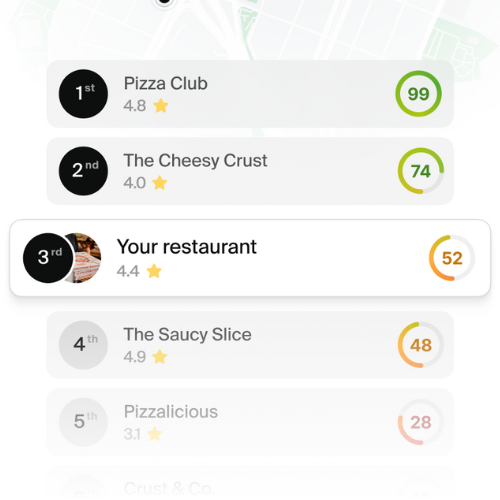
If your reservation system tracks diner history, use it. A first-time booker for a party of 8 on a Saturday is higher risk than a regular who has dined with you 12 times. High-risk profiles get a card-on-file requirement; loyal regulars get frictionless booking. This is the single biggest unlock direct platforms have over marketplaces: the data is yours to act on.
7. Track No-Show Rate Weekly
What gets measured gets managed. Track no-show rate as a percentage of total covers booked, broken down by day-part, party size, and channel. Most restaurants are surprised to discover 80% of their no-shows come from a specific slot (usually Saturday 8-9 PM) or a specific channel (usually a third-party marketplace).
The Bottom Line
A restaurant doing 400 covers a week with a 15% no-show rate is losing roughly 60 covers per week. At a $45 average check, that is $2,700 weekly — over $140,000 a year. Cutting that to 3% recovers nearly $115,000 in pure margin. The playbook above is not theoretical; it is what the most profitable independent restaurants are running today.
RAY helps restaurants take reservations directly on their own website with WhatsApp confirmations, smart waitlists, card-on-file rules, and diner history — no per-cover commissions, ever. If no-shows are eating your weekends, it is time to bring reservations back home.
Take commission-free direct reservations with RAY
Direct Bookings →
