Most restaurant loyalty programs fail for one quiet reason: the rewards are boring. A flat “10% off your next order” rarely changes how often someone eats with you. The reward is the engine of the whole program, and if it doesn’t excite guests, no amount of signup promotion will save it. In 2026, the restaurants winning the loyalty game are the ones designing rewards that actually pull people back through the door.
According to the 2026 Restaurant Industry Trends Report, 66% of consumers order more often from restaurants where they are active loyalty members. That repeat behavior only happens when the reward feels worth chasing. Here is how to design loyalty rewards that drive real, measurable repeat visits.
Why most rewards fall flat
A reward fails when it is too small to notice, too far away to reach, or too generic to feel personal. A discount buried twelve visits deep gives a guest nothing to look forward to next week. A reward that any restaurant could offer does nothing to make yours memorable.
The best rewards share three traits. They are reachable within a few visits, specific to your menu and brand, and worth talking about. When a guest mentions your free dessert to a friend, the reward has done double duty as marketing.
Visit-based rewards build habits
The simplest way to turn a casual customer into a regular is to reward frequency directly. Visit-based rewards create a rhythm that guests can feel.
- A free drink after three visits. Quick to reach, low cost to you, and it gives new members an early win that keeps them coming.
- A buy-one-get-one entree after five visits. This naturally brings a second person to the table, expanding your reach.
- A signature item after ten visits. Reserve your most-loved dish as the milestone reward so reaching it feels like an achievement.
The key is the early win. A reward a guest can hit on their second or third visit builds the habit before they drift to a competitor.
Tiers reward your best guests
Tiered programs recognize your most engaged diners and give everyone a reason to climb. A simple three-level structure works for most restaurants: an entry tier with quick perks, a mid tier with better rewards, and a top tier with exclusive benefits like priority reservations or a chef’s tasting.
Tiers work because they tap into status. Guests do not just want a discount; they want to feel like a recognized regular. Naming your tiers after something on-brand, rather than generic Bronze and Gold, makes the climb feel like part of your restaurant’s story.
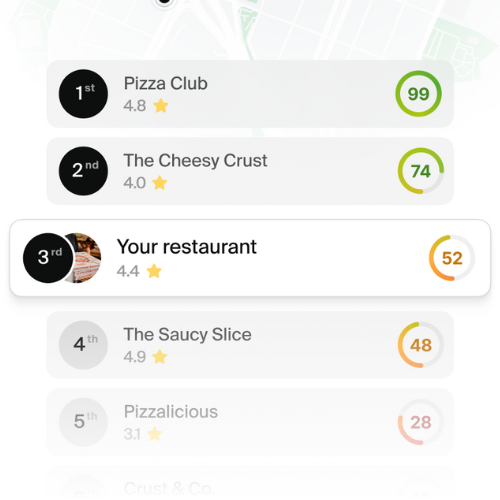
See how your restaurant ranks locally
Personalized rewards feel timely
The biggest shift in 2026 is that great loyalty programs use guest data to make rewards feel personal. A reward that lands at the right moment beats a bigger reward that lands at the wrong one.
- Birthday treats. A complimentary dessert or drink in someone’s birthday month is one of the highest-redemption rewards you can offer, and it brings a whole table with it.
- Favorite-item bonuses. If a guest always orders your ramen, a bonus tied to that dish feels like you know them.
- Win-back offers. When a regular goes quiet, an automated “we miss you” reward can pull them back before they are gone for good.
Behavioral challenges drive slow days
Rewards do not only build frequency. They can steer traffic to the exact times you need it. Challenge-style rewards turn a slow Tuesday into a game.
Try a weekday challenge that grants bonus points for three visits Monday through Thursday, or a seasonal-special reward for guests who try new menu items. These structured incentives move demand from packed weekend nights to the quiet shifts that actually need filling.
Make redemption effortless
The best reward in the world fails if claiming it is a hassle. In 2026, loyalty runs on wallet-native technology, QR-code enrollment, and automated messaging rather than punch cards and clunky apps. A guest should be able to join in seconds at the table and see their progress without thinking about it.
Friction at redemption is where loyalty dies. If a server has to hunt for a code or a guest has to download yet another app, the reward loses its pull. Keep the path from earning to redeeming as short as possible.
Measure what works
Treat your reward menu as something to test, not set in stone. Track redemption rates and repeat-visit frequency for each reward. If a milestone reward almost never gets claimed, it is too far away. If a reward redeems constantly but does not lift visit frequency, it may be too easy. Adjust the rewards that move repeat visits and retire the ones that do not.
Loyalty rewards are not a cost. They are the most direct lever you have on how often guests come back. Design them to be reachable, personal, and effortless to claim, and your program becomes a steady engine for repeat business instead of a punch card collecting dust in a wallet.
Turn one-time guests into loyal regulars with RAY

